
f you’re planning a trip to Transylvania and trying to decide between Bran Castle and Peleș Castle, you’re asking the right question — but you might be asking it the wrong way. These two castles are only 30 kilometres apart, yet they couldn’t be more different in character, history, and atmosphere. The real question isn’t which one to visit. It’s understanding what makes each one special.
Bran Castle: Legend, History, and Atmosphere
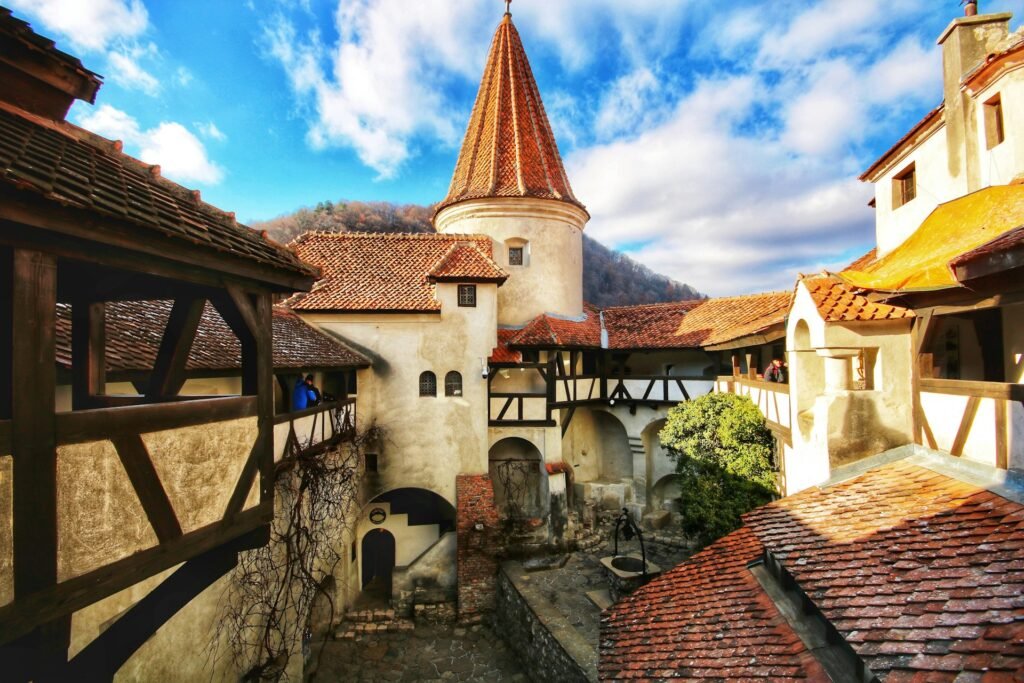
Bran Castle is Romania’s most recognisable landmark — a white-walled medieval fortress perched on a 60-metre limestone rock above the village of Bran, guarding the mountain pass between Transylvania and Wallachia. It was built in 1388 by the Saxon merchants of Brașov, and for seven centuries it changed hands between the Saxons, the Hungarian crown, and the Wallachian princes.
Most visitors come because of the Dracula connection. Bram Stoker never visited Romania — he assembled his fictional Transylvania from library books and travel memoirs — but the castle’s silhouette matched his imagination so perfectly that the myth took hold and never let go. The real Vlad III, Prince of Wallachia, almost certainly never lived here, though he may have been held prisoner briefly.
What Bran actually offers is something more interesting than the myth: a beautifully preserved medieval fortress that later became the summer residence of Queen Marie of Romania, one of the most remarkable women of the early 20th century. Her apartments are filled with icons, embroideries, and personal objects that tell a vivid story of royal life in the early 1900s.
Best for: History lovers, architecture enthusiasts, anyone curious about the real story behind the Dracula legend, and visitors who want atmosphere and medieval character.
Peleș Castle: Royal Grandeur and Architectural Spectacle
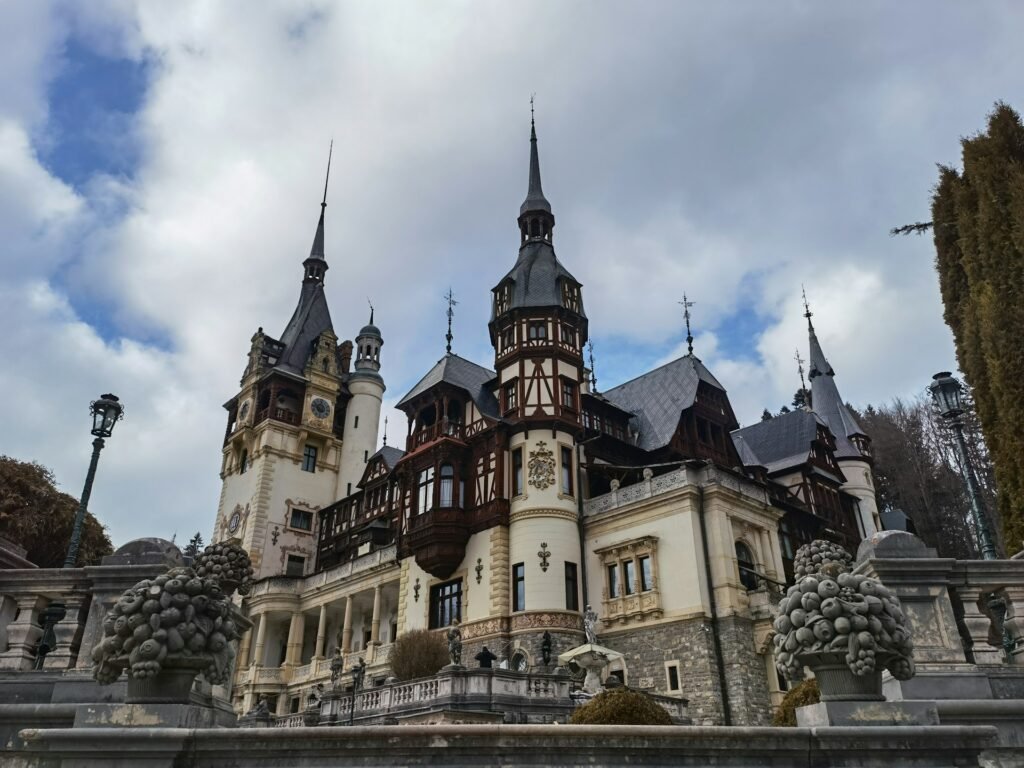
Peleș Castle in Sinaia is a different experience entirely. Built between 1873 and 1914 as the summer residence of King Carol I — Romania’s first king — it is one of the most lavishly decorated palaces on the European continent. 160 rooms, 30 bathrooms, a central heating system, an elevator, and its own electricity generator made it one of the most technologically advanced buildings in Europe at the time of its completion.
The interior is extraordinary: a Hall of Honour soaring three storeys high with carved walnut panelling and stained-glass skylights; a Moorish Salon covered in hand-carved plasterwork and mother-of-pearl inlay; a private theatre with frescoes commissioned from the workshop of a young Gustav Klimt; and a Royal Dining Room furnished with the finest porcelain and crystal from across Europe.
Carol I wanted Peleș to signal Romania’s arrival as a modern European nation, and he succeeded. The palace is simultaneously a royal residence, a museum of decorative arts, and a statement of national ambition.
Best for: Anyone who loves ornate interiors, royal history, and architectural detail. Peleș rewards slow, attentive visitors — there is almost too much to take in.
The Key Differences
Age and character: Bran is medieval — dark corridors, irregular rooms, the feel of a working fortress. Peleș is 19th-century Neo-Renaissance — grand, symmetrical, and designed to impress.
Crowds: Both are popular, but Bran draws more visitors overall because of the Dracula association. Peleș tends to attract a more architecture-focused crowd.
Time needed: Allow 1.5–2 hours for Bran, 2–2.5 hours for Peleș if you want to see it properly. With a guided tour and audio guide, you’ll get far more from both.
Getting there: Neither is easy to reach independently without a car. Bran is about 30km from Brașov; Peleș is in Sinaia, about 50km away. A guided day tour is by far the most efficient way to see both.
Why the Best Answer Is Both
The contrast between Bran and Peleș is precisely what makes visiting both so rewarding. In a single day, you move from a medieval fortress steeped in legend to a royal palace of extraordinary opulence — two completely different chapters of Romanian history, separated by just 30 kilometres of mountain road.
Our Castles & Sinaia full-day tour combines both castles with Sinaia Monastery and Cantacuzino Castle into a single guided day from Brașov. You get return transport, a local expert guide, and our exclusive audio guide — 40 narrated tracks covering every room, every story, and every hidden detail across all three castles.
From €44 per person. Small groups, daily departures from central Brașov.